• homeHome
  • searchSearch
  • emailContact

Secondary menu

  • Who we are
    • Our people
    • Governance
    • Traditional Custodians
    • Project Partners
    • Our people
    • Governance
    • Working with Traditional Custodians
    • Project partners

  • What we do
    • Research
    • Monitoring
    • Expert advice
    • Education & Communication
    • Research
      • Biology
      • Threats
      • Other Research
    • Monitoring
    • Expert advice
    • Education and communication
      • School Engagement
      • Community Engagement
      • Communicating Science

  • Flatback turtles
    • Flatback biology
    • Flatback threats
    • Flatback conservation
    • Australian turtles
    • Flatback biology
    • Flatback threats
    • Flatback conservation
    • Australian turtles

  • Resources
    • Guidelines and policies
    • Peer-reviewed research
    • Monitoring and volunteering
    • Education resources
    • Code of Conduct
    • Guidelines and policies
    • Peer-reviewed research
    • Monitoring and volunteering
    • Education resources

  • Get involved
    • Work with us
    • Post-graduate students
    • Volunteering
    • Learn with us
    • Work with us
    • Post-graduate students
    • Volunteering
    • Learn with us

  • Turtle watching

Breadcrumb

  1. Home
  2. Flatback Turtles

Flatback biology

Photo - DBCA

Understanding a unique Australian turtle

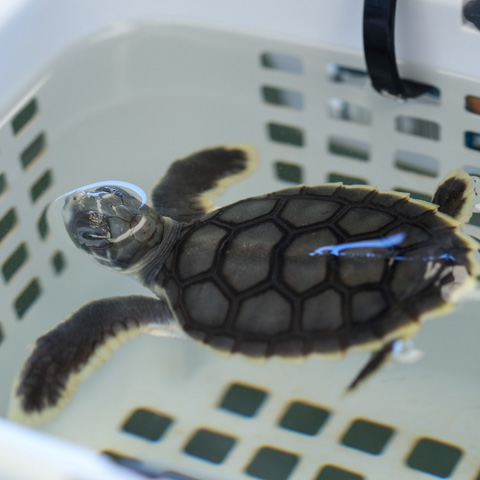
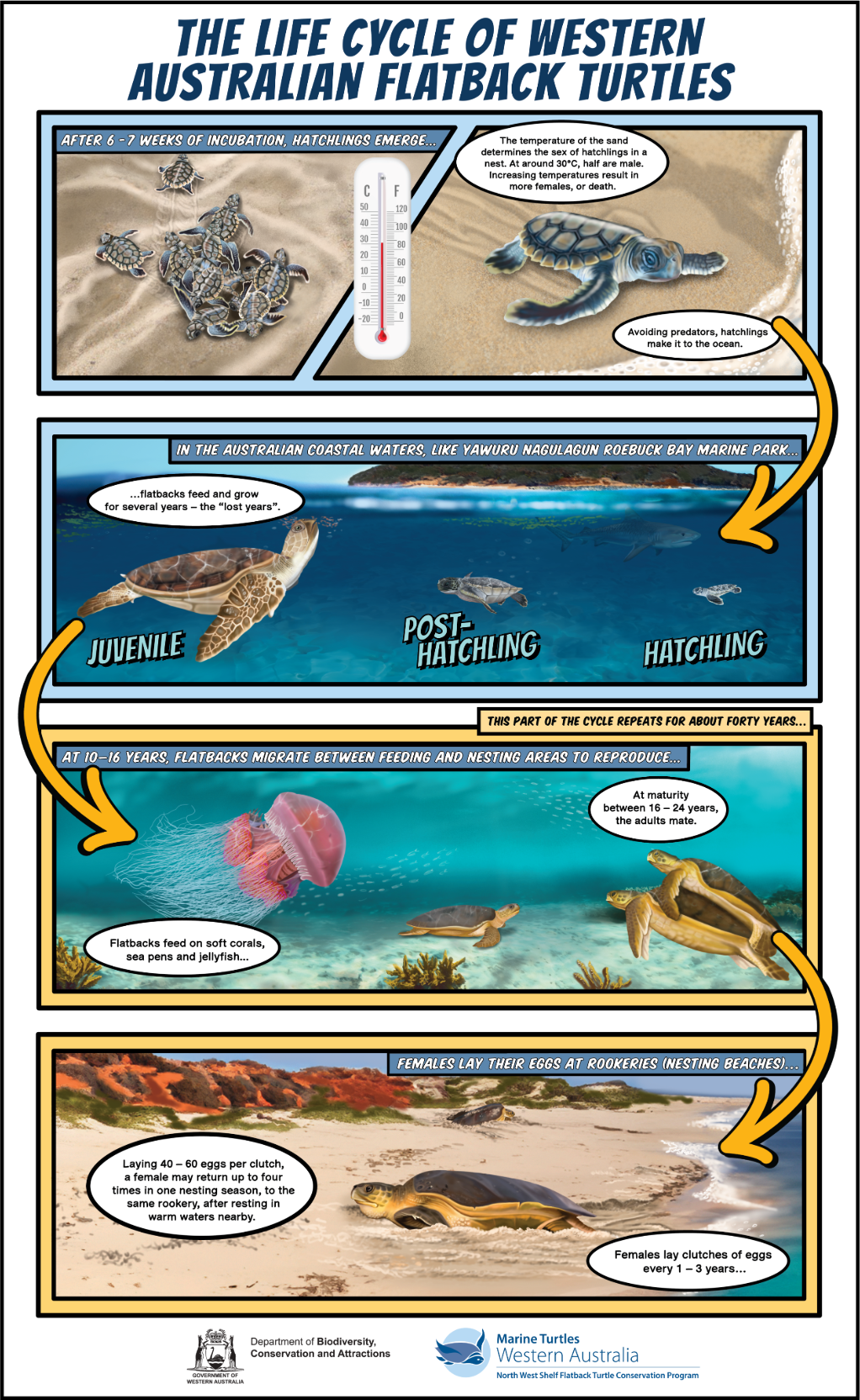
Flatback turtles don't just look different from other species of marine turtles, they also have a different life cycle to other species and spend almost all of their life in Australian waters - this makes them endemic (native) to Australia. 

Flatbacks nest throughout Northern Australia, which includes parts of Western Australia, Northern Territory and Queensland.

See more about their unique life cycle below: 
Populations of flatback turtles in WA

There are seven genetically distinct stocks (a scientific word for “populations”) of flatback turtles within Australia, five of which are in Western Australia. This program concentrates on the North West Shelf stock in the Pilbara region of Western Australia. The other genetic stocks in Western Australia are Eighty Mile Beach, south-western Kimberley, north-western Kimberley and Joseph Bonaparte Gulf. Photo - DBCA
Where and how do they nest?

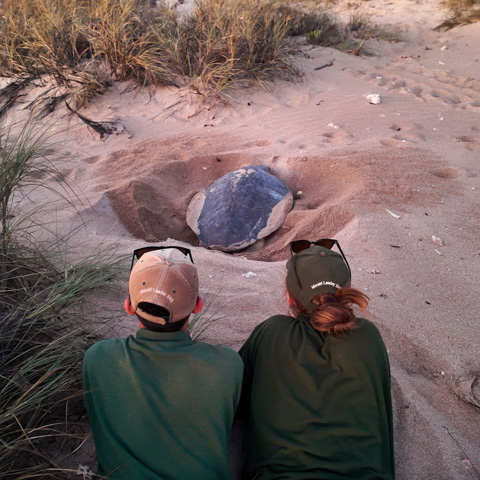
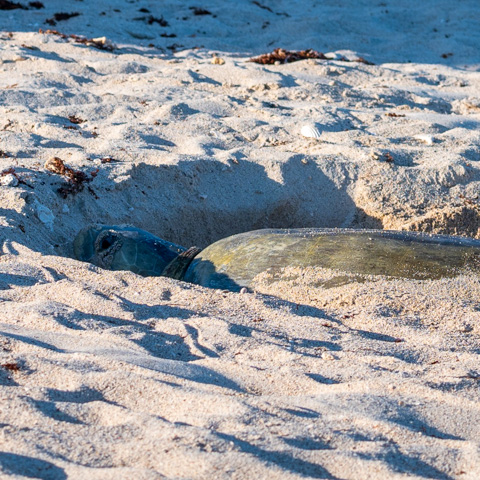
Female marine turtles will return to a rookery (nesting beach) close to where they were born to lay eggs – for the North West Shelf flatback turtles this is between Exmouth Gulf and just south of Eighty Mile Beach. Females will travel a short distance from the shore to find a suitable location for their nest, and if they feel safe, will dig a hole with their back flippers, lay 50 – 70 eggs and then fill the hole back in before returning to the water. Flatback turtles lay fewer, but bigger eggs than other species of marine turtle. Photo - Tristan Simpson/DBCA
Where do they go?

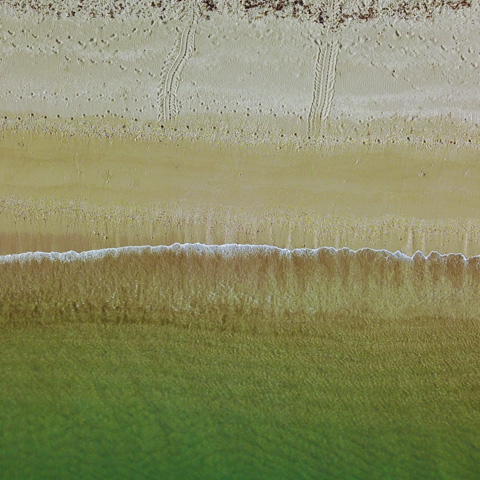
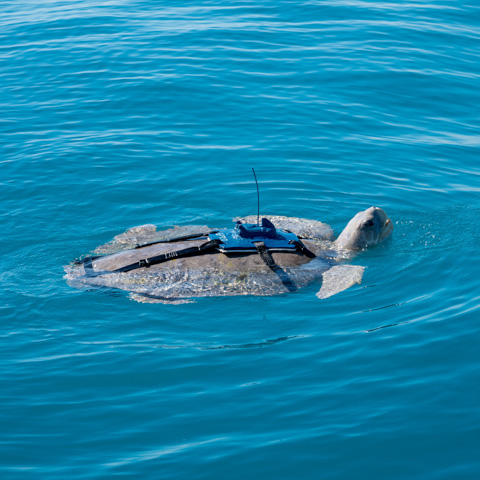
Flatback turtles spend almost all of their time within Australian waters, travelling hundreds of kilometres between their nesting beaches and the areas where they forage (eat) and mate. While this sounds like a long distance, it is quite small compared to other marine turtle species, some of which travel thousands of kilometres around the world during their migration. Photo - Tristan Simpson/DBCA
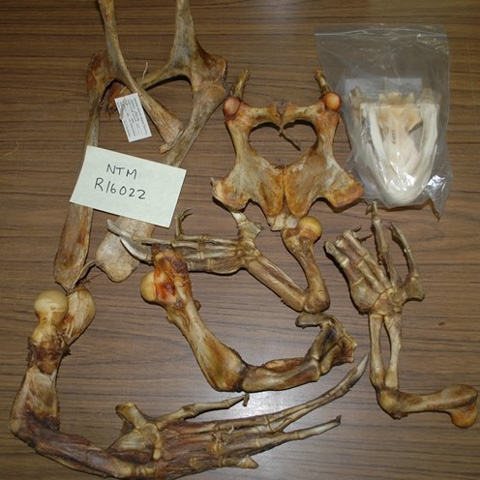
How old can they get?

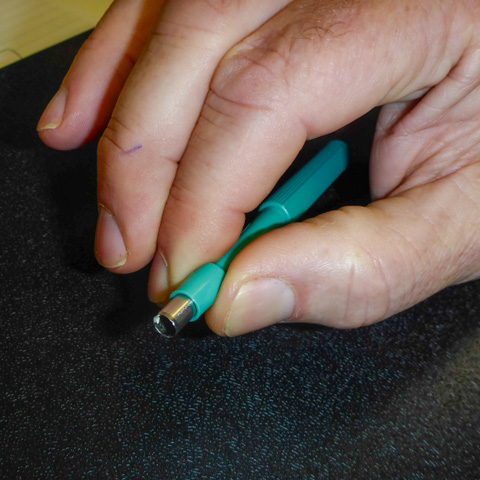
By counting the rings in their bones (like you would do with a tree) scientists have discovered that flatback turtles start reproducing when they are approximately sixteen years old and live to approximately 50 years old. Females lay eggs every two to three years, meaning they could lay around 2000 eggs over their lifetime! Photo - DBCA

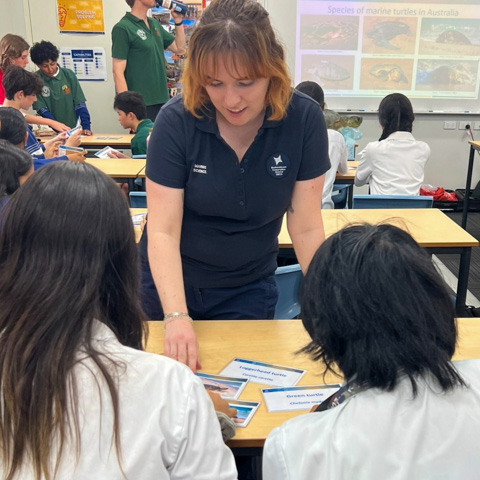
How to help

Volunteer
Invite us to your school
Wildcare Helpline
Taking climate action
How to behave around turtles
Information for fishermen

Flatback conservation

  • Flatback biology
  • Flatback threats
  • Flatback conservation
  • Australian turtles

If you've found injured wildlife, call the Wildcare Helpline on 61 8 9474 9055.

Image
facebook
Image
linkedin
Image
icon-instagram
Image
icon-email

Footer Home

  • Home
  • Latest updates
  • Contact

Who we are menu

  • Who we are
    • Our people
    • Governance
    • Working with Traditional Custodians
    • Project partners

  • Our people
  • Governance
  • Traditional Custodians
  • Project partners

What we do menu

  • What we do
    • Research
      • Biology
      • Threats
      • Other Research
    • Monitoring
    • Expert advice
    • Education and communication
      • School Engagement
      • Community Engagement
      • Communicating Science

  • Research
  • Monitoring
  • Expert advice
  • Education

Flatback turtles menu

  • Flatback turtles
    • Flatback biology
    • Flatback threats
    • Flatback conservation
    • Australian turtles

  • Flatback biology
  • Flatback threats
  • Flatback conservation
  • Marine turtles of WA

Resources menu

  • Resources
    • Guidelines and policies
    • Peer-reviewed research
    • Monitoring and volunteering
    • Education resources

  • Guidelines & policies
  • Peer-reviewed research
  • Monitoring and volunteering
  • Education

Get involved menu

  • Get involved
    • Work with us
    • Post-graduate students
    • Volunteering
    • Learn with us

  • Work with us
  • Post-graduate students
  • Volunteering
  • School camps & incursions

WA.gov.au

Copyright

Disclaimer

Privacy

© Government of Western Australia 2025

Back to top