• homeHome
  • searchSearch
  • emailContact

Secondary menu

  • Who we are
    • Our people
    • Governance
    • Traditional Custodians
    • Project Partners
    • Our people
    • Governance
    • Working with Traditional Custodians
    • Project partners

  • What we do
    • Research
    • Monitoring
    • Expert advice
    • Education & Communication
    • Research
      • Biology
      • Threats
      • Other Research
    • Monitoring
    • Expert advice
    • Education and communication
      • School Engagement
      • Community Engagement
      • Communicating Science

  • Flatback turtles
    • Flatback biology
    • Flatback threats
    • Flatback conservation
    • Australian turtles
    • Flatback biology
    • Flatback threats
    • Flatback conservation
    • Australian turtles

  • Resources
    • Guidelines and policies
    • Peer-reviewed research
    • Monitoring and volunteering
    • Education resources
    • Code of Conduct
    • Guidelines and policies
    • Peer-reviewed research
    • Monitoring and volunteering
    • Education resources

  • Get involved
    • Work with us
    • Post-graduate students
    • Volunteering
    • Learn with us
    • Work with us
    • Post-graduate students
    • Volunteering
    • Learn with us

  • Turtle watching

Breadcrumb

  1. Home
  2. Flatback Turtles

Flatback conservation

Photo - James Gee/DBCA

Taking action to conserve flatback turtles

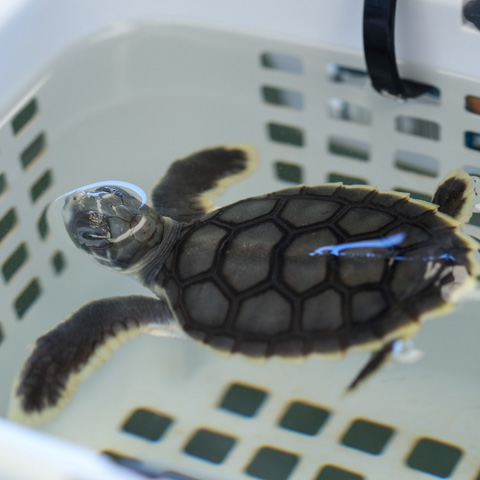
Flatback turtles are listed as ‘Vulnerable’ by the Australian Commonwealth Government, which means they are at risk of becoming endangered if conservation efforts are not put in place. The program helps to conserve the species by conducting research and monitoring, providing expert advice when needed, and informing and educating the public about flatback turtles and how to conserve them.
Image
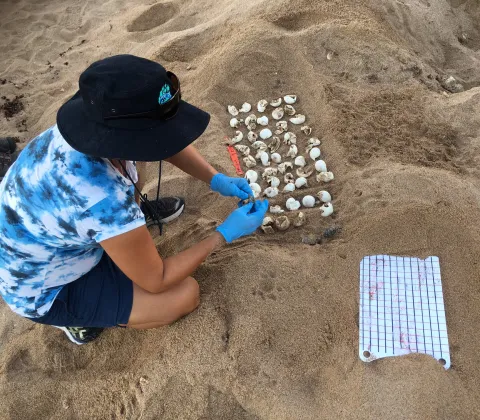
A person counting turtle eggs
Photo - DBCA

Above: A volunteer counts how many eggs have hatched from a flatback turtle nest after all hatchlings have left the nest. By doing this, scientists can understand how many eggs were laid, how many hatched successfully and how many did not develop into baby turtles. Some nests also have temperature loggers placed in them, which helps scientists understand if there is a link between the temperature of the nest and how many eggs hatch successfully. 
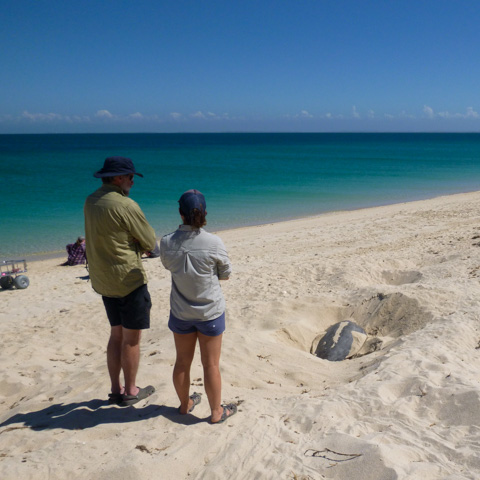
Monitoring flatback turtles

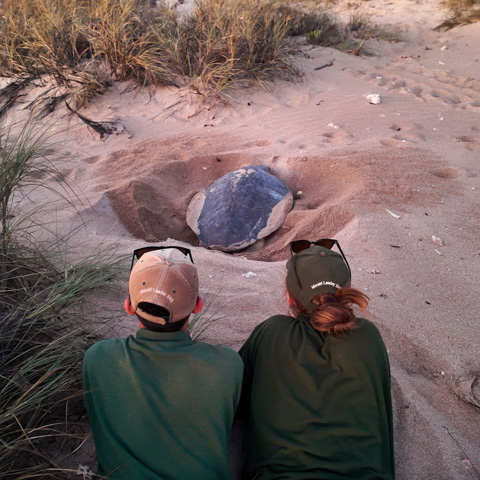
Staff and volunteers travel to Thevenard Island and Delambre Island each year to gather information on the flatback turtles that nest there. Each night turtles are watched from a safe distance while nesting and identified on their way back to the water, and the beach is checked again in the morning to make sure no nests have been missed. Collecting information from the same islands each year makes it easier to understand when changes happen, such as less turtles returning to nest. Photo - DBCA
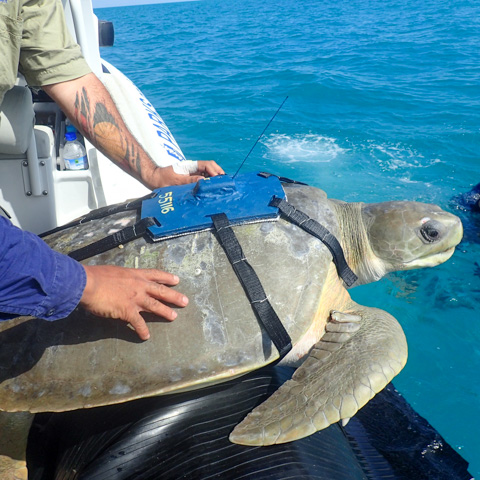
Researching flatback turtles

The program’s research scientists are constantly working to understand more about flatback turtles, which are listed as ‘Data Deficient’ internationally. Finding the answers to questions about their abundance, distribution, lifecycle and threats helps to plan and prioritise conservation efforts for the future, such as figuring out which beaches will become critical for turtles as temperatures increase. Photo - DBCA
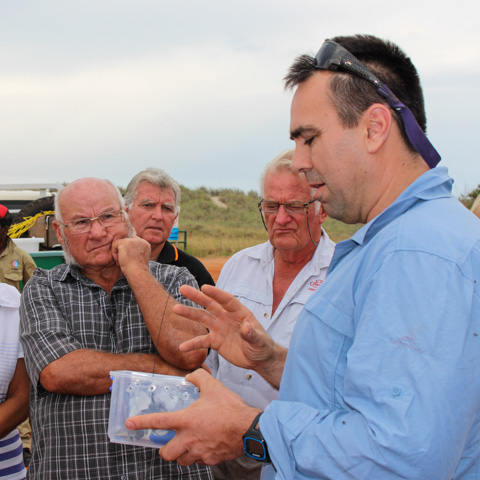
Providing advice

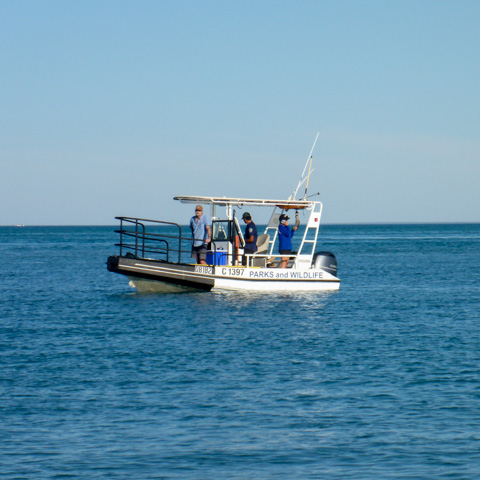
NWSFTCP staff provide expert advice about flatback turtles to those who need it, including businesses that want to understand if their plans to develop an area will disturb or injure flatback turtles, other government departments working to create management plans or issue licenses, and formal groups that meet to discuss marine turtles. This advice is provided to improve the conservation of flatbacks and other marine turtles. Photo - DBCA
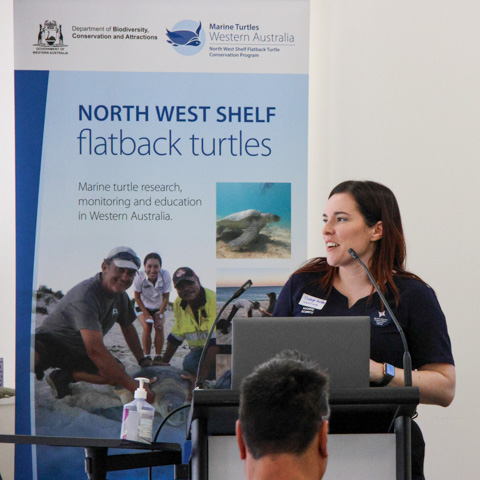
Educating the public

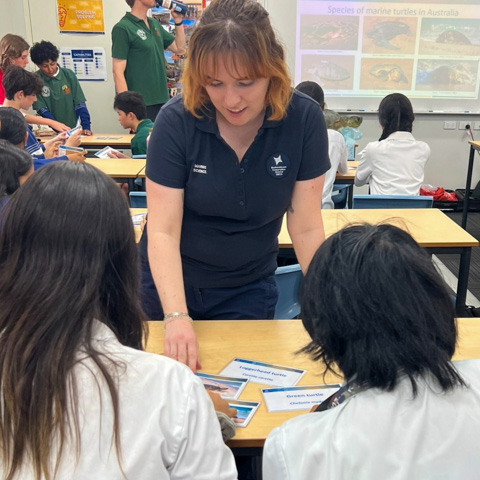
A major aim of the program is to inform and educate the public and stakeholders (people or businesses with an interest in the program) about flatback turtles and how to conserve them. This is done in many ways such as this website, social media, participation in local events, visiting schools and local community groups, and providing education resources for primary and secondary school teachers. Photo - DBCA

How to help

Volunteer
Invite us to your school
Wildcare Helpline
Taking climate action
How to behave around turtles
Information for fishermen

Flatback conservation

  • Flatback biology
  • Flatback threats
  • Flatback conservation
  • Australian turtles

If you've found injured wildlife, call the Wildcare Helpline on 61 8 9474 9055.

Image
facebook
Image
linkedin
Image
icon-instagram
Image
icon-email

Footer Home

  • Home
  • Latest updates
  • Contact

Who we are menu

  • Who we are
    • Our people
    • Governance
    • Working with Traditional Custodians
    • Project partners

  • Our people
  • Governance
  • Traditional Custodians
  • Project partners

What we do menu

  • What we do
    • Research
      • Biology
      • Threats
      • Other Research
    • Monitoring
    • Expert advice
    • Education and communication
      • School Engagement
      • Community Engagement
      • Communicating Science

  • Research
  • Monitoring
  • Expert advice
  • Education

Flatback turtles menu

  • Flatback turtles
    • Flatback biology
    • Flatback threats
    • Flatback conservation
    • Australian turtles

  • Flatback biology
  • Flatback threats
  • Flatback conservation
  • Marine turtles of WA

Resources menu

  • Resources
    • Guidelines and policies
    • Peer-reviewed research
    • Monitoring and volunteering
    • Education resources

  • Guidelines & policies
  • Peer-reviewed research
  • Monitoring and volunteering
  • Education

Get involved menu

  • Get involved
    • Work with us
    • Post-graduate students
    • Volunteering
    • Learn with us

  • Work with us
  • Post-graduate students
  • Volunteering
  • School camps & incursions

WA.gov.au

Copyright

Disclaimer

Privacy

© Government of Western Australia 2025

Back to top