Home
Home Search
 Contact


Taking turtle conservation to students
The North West Shelf Flatback Turtle Conservation Program visits schools and communities across Western Australia, providing the opportunity for students of all ages from Pre-Primary to Year 12 to engage with turtle conservation.
Opportunities available
The Program delivers a range of engagement opportunities for schools. These include classroom incursions that are curriculum-linked for specific year groups, designed to support the Western Australian science curriculum across all strands (physical, chemical, biological, and earth and space science) and upper school General and ATAR subjects (Biology and Marine and Maritime Studies). All incursions are delivered within a marine turtle conservation context, while engaging students with real-world scientific research and concepts.
Extracurricular engagement opportunities are also available, such as after-school learning club sessions, Bush Rangers WA unit activities, and school holiday workshops through Department of Biodiversity, Conservation and Attractions’ (DBCA) Nearer to Nature program.
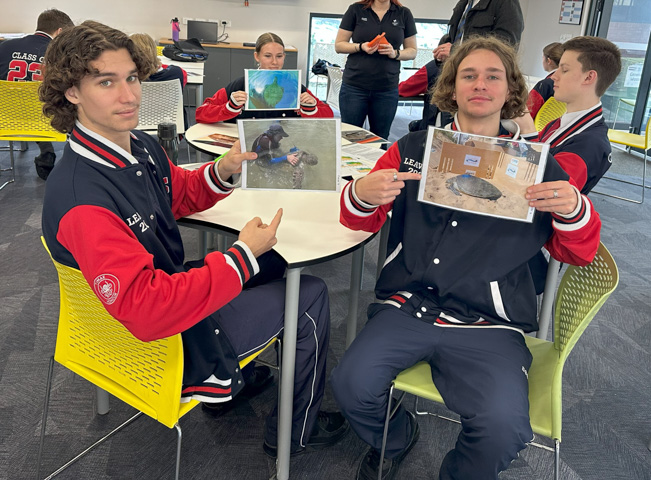
Year 12 Marine and Maritime Studies students at St Stephen’s School explored research undertaken by the Program, understanding more about how research informs conservation management at the DBCA. Photo - DBCA
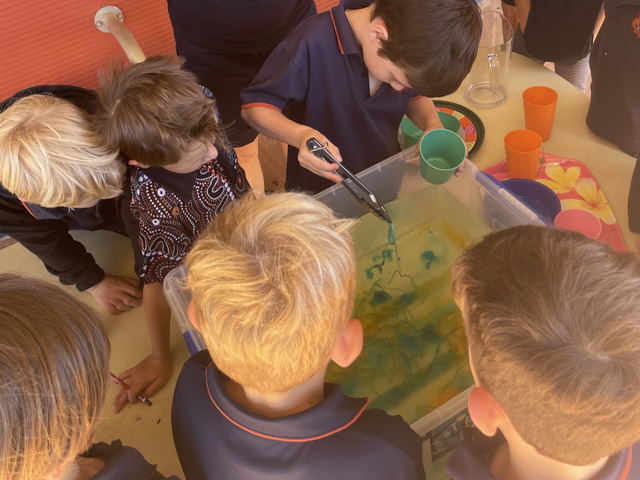
Year 2 students at Onslow School made their own jellyfish and investigated how turtles eat, in a lesson designed to explore the chemical science strand and how different materials can be combined for a particular purpose. Photo - DBCA
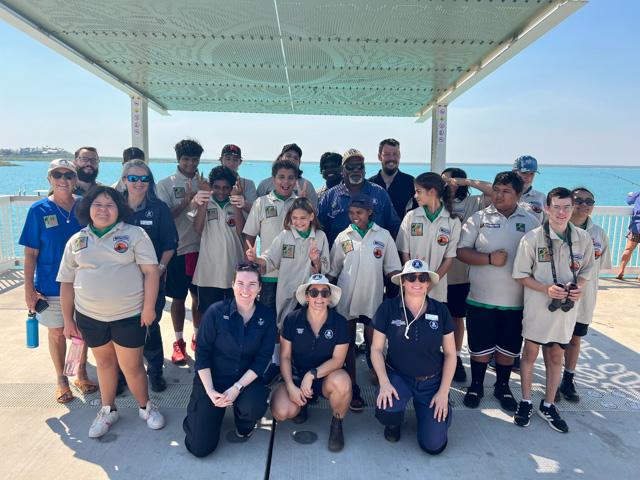
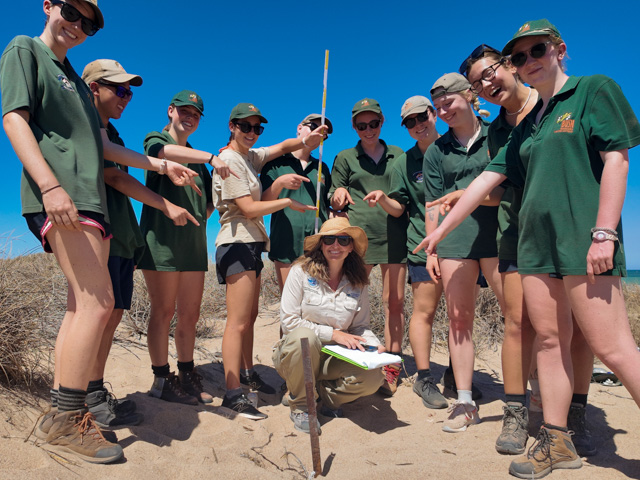
Bush Rangers from Broome Senior High School learned about marine turtles and their conservation in Yawuru Nagulagun Roebuck Bay Marine Park from the Program’s science communication officer and DBCA Yawuru Ranger, Preston Manado. Photo - DBCA
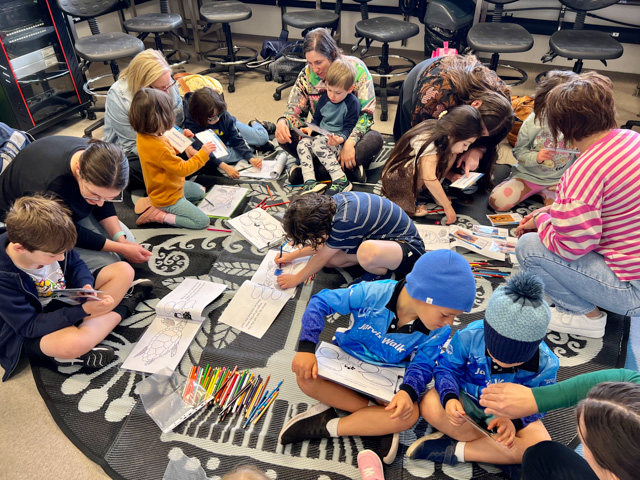
Young children played memory games and drew pictures to learn the different types of marine turtles and their life cycle during a school holiday Nearer to Nature turtle conservation activity. Photo - DBCA
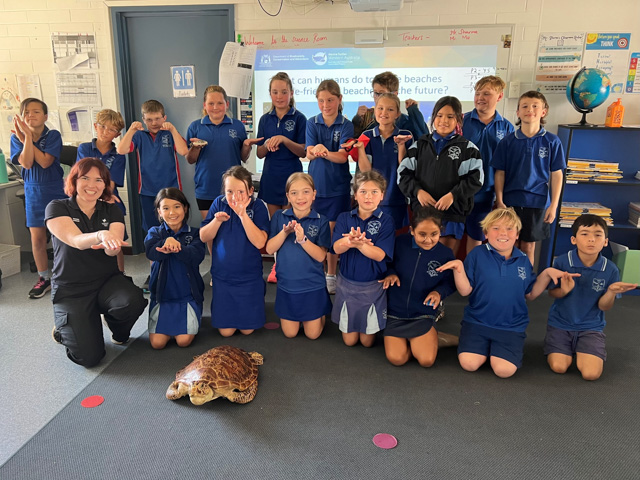
Hedland students helping turtles!
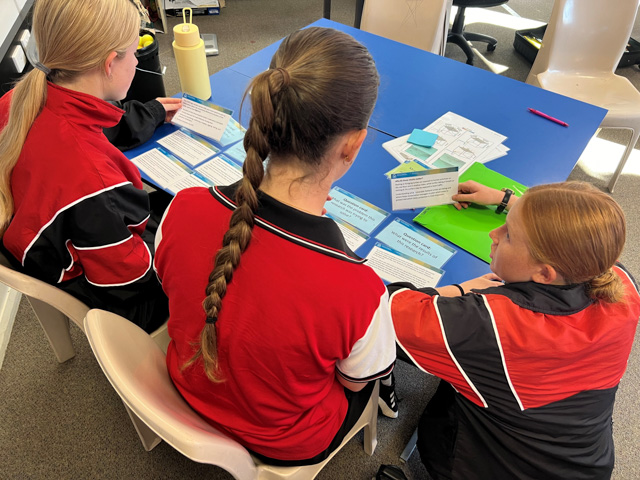
Port Hedland Primary School Year 5 students learned about “Turtle Friendly Beaches” during their incursion, addressing the physical and biological science strands.
“Clodagh was very knowledgeable, and the students were EXTREMELY engaged. They had so many questions and now wish to write a persuasive text to the Town of Port Hedland to turn off the park lights at Cemetery Beach! Clodagh was amazing and motivated the students to want to make a change to help the survival rate of the flatbacks.” - Seana McCourt, teacher
Photo - DBCA
Frequently asked questions

Incursions can be delivered across Western Australia, depending on availability. The Program’s staff are based in Perth and travel regularly to the Pilbara and Kimberley regions. The Program aims to engage people across the state in turtle conservation, and education trips to the southwest and Gascoyne regions can be arranged as requested.
There is no fee for the Program’s classroom incursions. Some activities facilitated by the Program but run by another organisation (for instance, Nearer to Nature’s school holiday program) may incur a fee.
The Program’s Science Communication and Education Officer develops and delivers the incursions. With eight years of secondary classroom teaching experience, the presenter is confident with any year group and lessons are engaging and interactive.
To arrange an incursion, please complete the Enquiry Form using the link at the bottom of this page and refer to the ‘Education resources’ page for lessons that are available to book. If there are no lessons listed that fit your schools’ needs or you are booking a specific event (e.g. Science Week or Sea Week), get in touch with your requirements via the Enquiry Form and we may be able to develop an incursion to suit.