• homeHome
  • searchSearch
  • emailContact

Secondary menu

  • Who we are
    • Our people
    • Governance
    • Traditional Custodians
    • Project Partners
    • Our people
    • Governance
    • Working with Traditional Custodians
    • Project partners

  • What we do
    • Research
    • Monitoring
    • Expert advice
    • Education & Communication
    • Research
      • Biology
      • Threats
      • Other Research
    • Monitoring
    • Expert advice
    • Education and communication
      • School Engagement
      • Community Engagement
      • Communicating Science

  • Flatback turtles
    • Flatback biology
    • Flatback threats
    • Flatback conservation
    • Australian turtles
    • Flatback biology
    • Flatback threats
    • Flatback conservation
    • Australian turtles

  • Resources
    • Guidelines and policies
    • Peer-reviewed research
    • Monitoring and volunteering
    • Education resources
    • Code of Conduct
    • Guidelines and policies
    • Peer-reviewed research
    • Monitoring and volunteering
    • Education resources

  • Get involved
    • Work with us
    • Post-graduate students
    • Volunteering
    • Learn with us
    • Work with us
    • Post-graduate students
    • Volunteering
    • Learn with us

  • Turtle watching

Breadcrumb

  1. Home
  2. Flatback Turtles

Australian turtles

Photo - Tristan Simpson/DBCA

Other marine turtle species in Australia

Flatback turtles are one of six marine turtle species that can be found in Australia. 

Five of these species can be found nesting in Western Australia – four on both the mainland and islands (flatback, green, hawksbill and loggerhead) and one only on islands (olive ridley).

Where are Australian turtles found? 

Use the map below to see where each species nest (circles - representing 'rookeries') and their distribution at sea (shading). 


Disclaimer: 

The data included in this graph has been adapted from the Australian Government's Department of Climate Change, Energy, the Environment and Water "Recovery Plan for Marine Turtles in Australia" (2013). This data is to be used only for educational purposes and not for distribution, publication or commercial use. Data may have been de-identified or excluded in the process of making it available to the public domain and is subject to change following further curation and analysis.

Read more about the other turtle species below
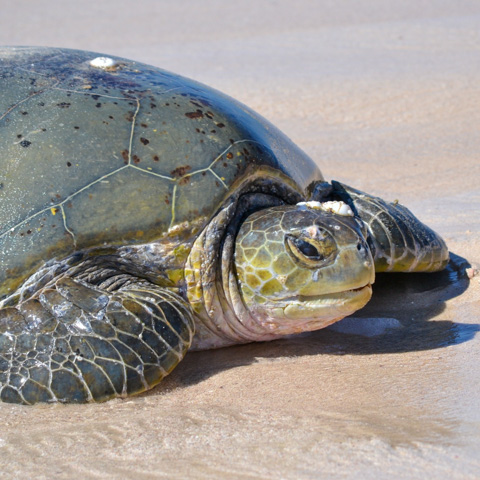
Green turtles

Green turtles are the most common species of marine turtle in Western Australia, with their name coming from the fact that their fat is coloured green due to their diet. Their carapace (or shell) is a high dome and they are coloured from light to dark green with dark mottling. They can grow up to 1.5m in length and can weigh up to 200kg. Photo - Maggie Wright/Ningaloo Turtle Program
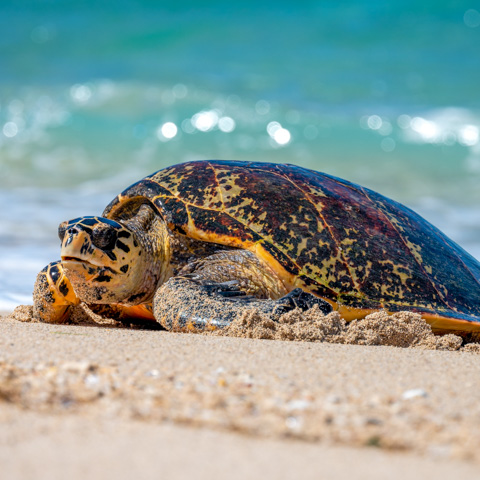
Hawksbill turtles

Hawksbill turtles have a unique beak that resembles a bird of prey and a patterned shell with thick, overlapping scales that was once used to make ‘tortoiseshell’ jewellery and is prized by poachers. They can grow up to 90cm in length and can weigh up to almost 70kg. Photo - Tristan Simpson/DBCA
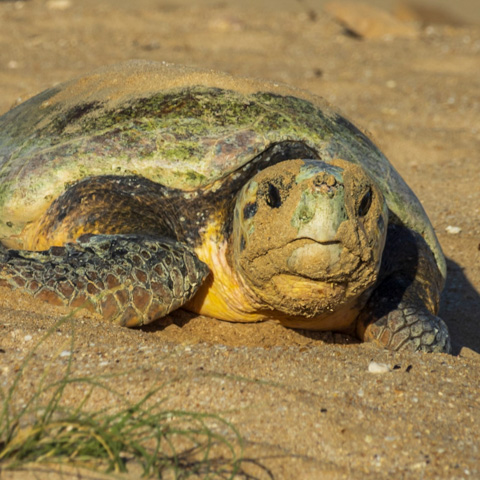
Loggerhead turtles

Loggerhead turtles have a large head in comparison with their body, with strong jaws that help them eat their preferred diet of hard-shelled animals such as sea urchins. Their colouring ranges from red brown to brown. They can grow up to 1.2m in length and can weigh up to 180kg. Photo - Craig Duncan
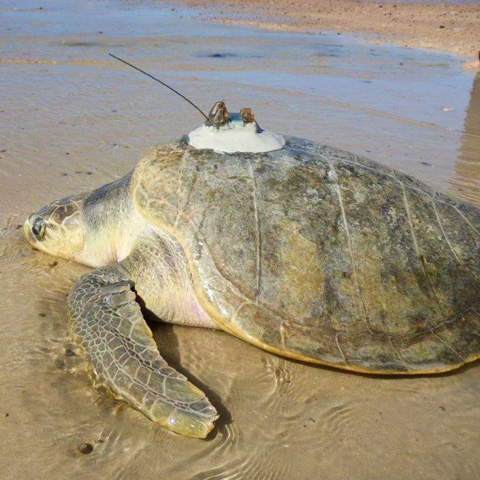
Olive Ridley turtles

Olive ridley turtles are the smallest of the marine turtles, with a grey-green shell that is shaped like a heart. They can grow up to 70cm and can weigh up to 50kg. Photo - DBCA
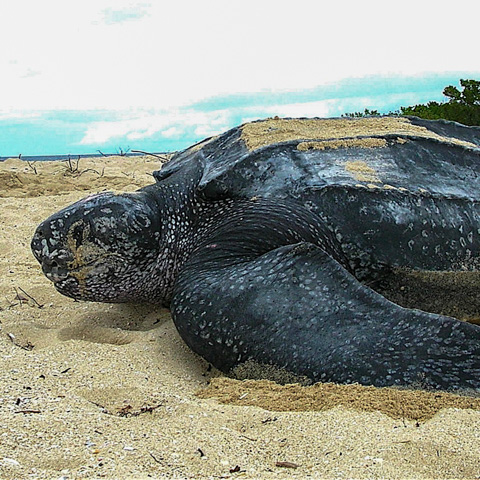
 

Leatherback turtles

Leatherback turtles are easily distinguishable from other marine turtles due to their unique ridged carapace. They are the largest species of marine turtles, growing up to lengths of 2.5m and weighing up to 900kg (about the weight of a Clydesdale horse). This species does not nest in Western Australia. Photo - Wikipedia

How to help

Volunteer
Invite us to your school
Wildcare Helpline
Taking climate action
How to behave around turtles
Information for fishermen

Flatback conservation

  • Flatback biology
  • Flatback threats
  • Flatback conservation
  • Australian turtles

If you've found injured wildlife, call the Wildcare Helpline on 61 8 9474 9055.

Image
facebook
Image
linkedin
Image
icon-instagram
Image
icon-email

Footer Home

  • Home
  • Latest updates
  • Contact

Who we are menu

  • Who we are
    • Our people
    • Governance
    • Working with Traditional Custodians
    • Project partners

  • Our people
  • Governance
  • Traditional Custodians
  • Project partners

What we do menu

  • What we do
    • Research
      • Biology
      • Threats
      • Other Research
    • Monitoring
    • Expert advice
    • Education and communication
      • School Engagement
      • Community Engagement
      • Communicating Science

  • Research
  • Monitoring
  • Expert advice
  • Education

Flatback turtles menu

  • Flatback turtles
    • Flatback biology
    • Flatback threats
    • Flatback conservation
    • Australian turtles

  • Flatback biology
  • Flatback threats
  • Flatback conservation
  • Marine turtles of WA

Resources menu

  • Resources
    • Guidelines and policies
    • Peer-reviewed research
    • Monitoring and volunteering
    • Education resources

  • Guidelines & policies
  • Peer-reviewed research
  • Monitoring and volunteering
  • Education

Get involved menu

  • Get involved
    • Work with us
    • Post-graduate students
    • Volunteering
    • Learn with us

  • Work with us
  • Post-graduate students
  • Volunteering
  • School camps & incursions

WA.gov.au

Copyright

Disclaimer

Privacy

© Government of Western Australia 2025

Back to top