
 Home
Home Search
 Contact


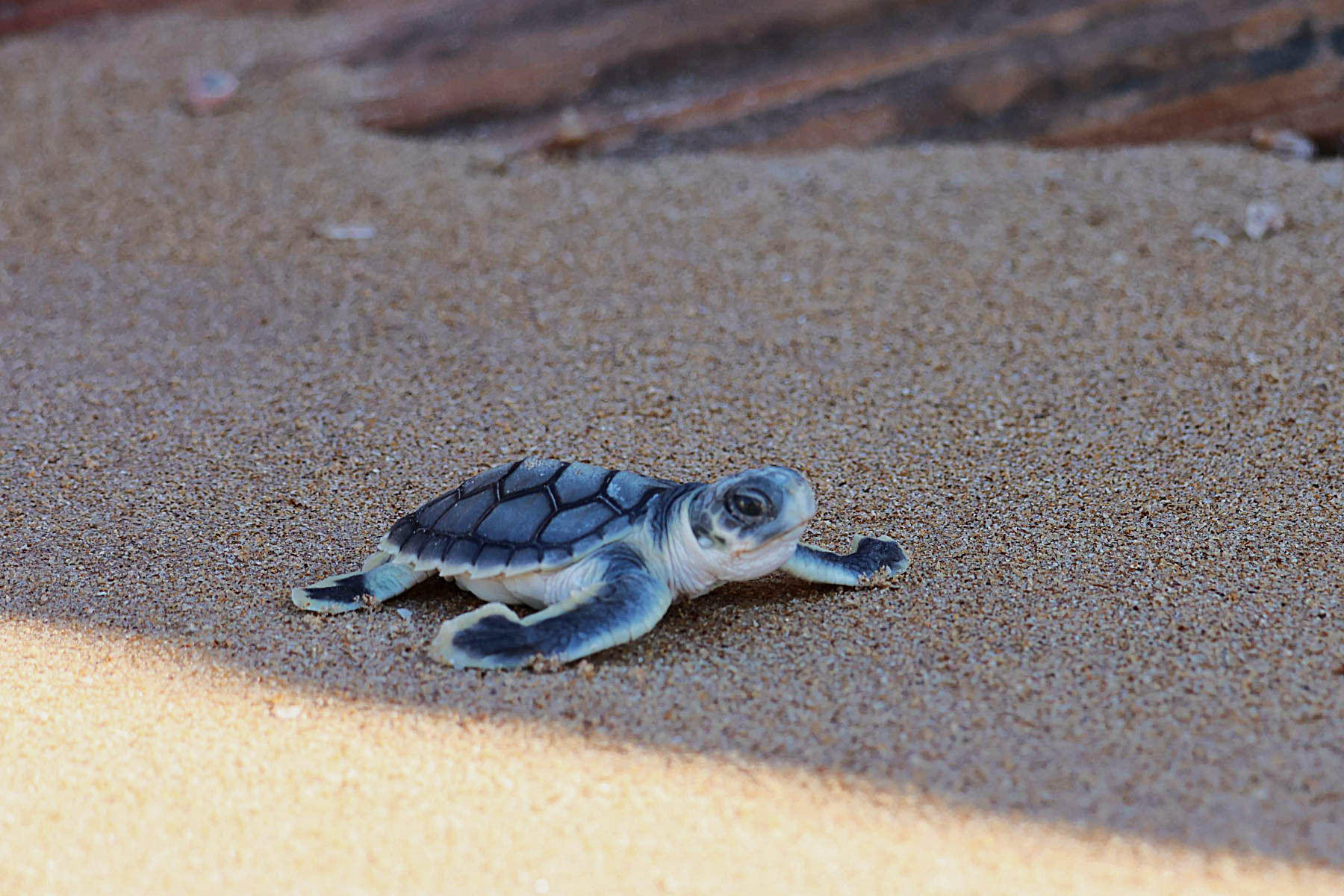
Seeing hatchlings emerge from their nests and make their journey to the ocean is an incredibly special experience.
From November through to March, hatchlings emerge from their nests on the sandy beaches of north-west WA and make their way to the ocean.
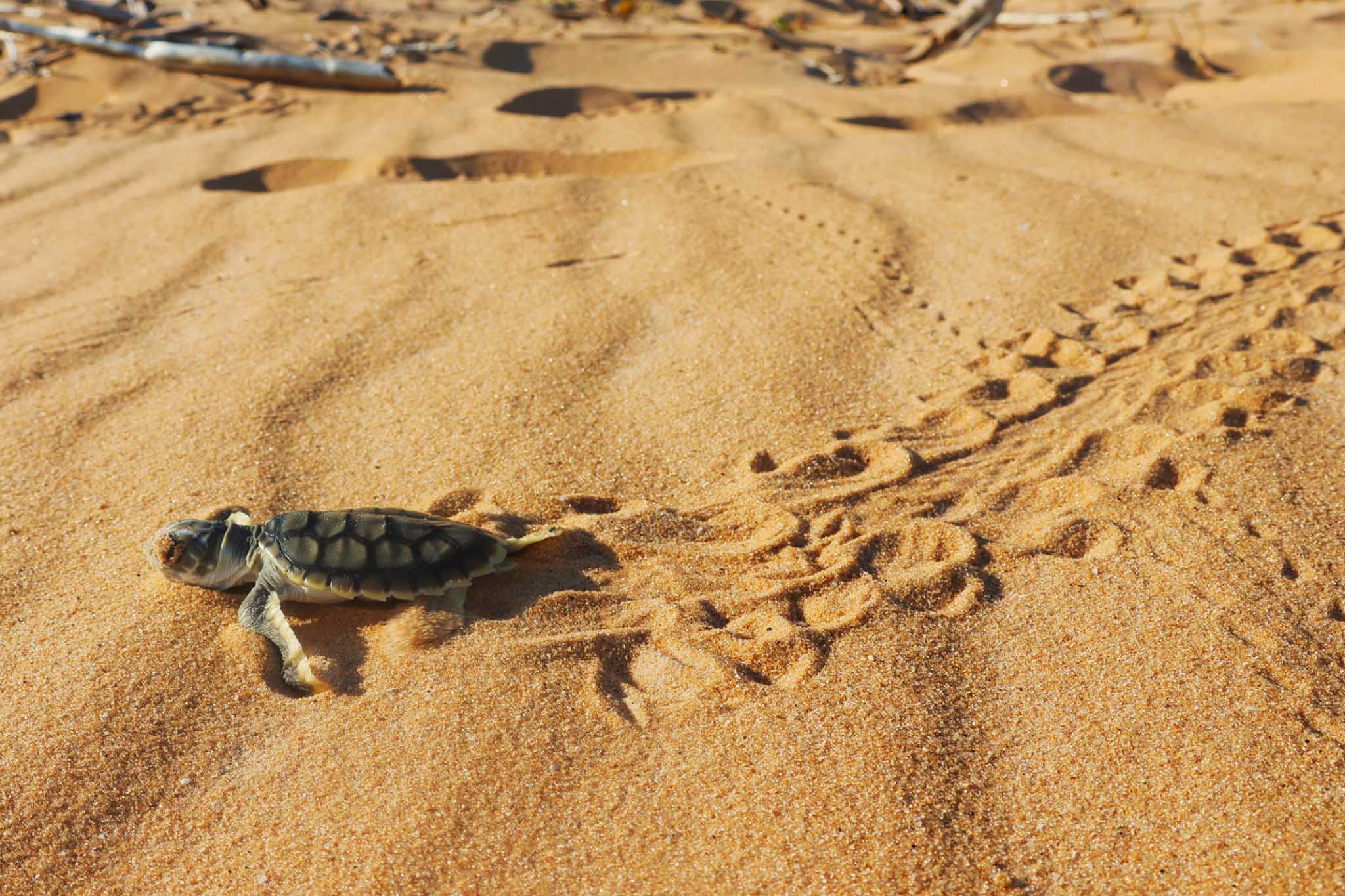
Follow these simple steps to keep hatchlings safe:

When hatchlings are emerging, they use natural light cues on the horizon to guide them to the ocean. They are very sensitive to artificial white and blue light.
Hatchling emergence is triggered by cooling sand in the evening. By visiting beaches between 5.30 - 7.00 in the AM or PM, you will be able to see hatchlings emerging without the need for artificial light sources that could distract or misorient the hatchlings. Plus, you will be able to take clear photos and videos of them!
When hatchlings are emerging, they use natural light cues on the horizon to guide them to the ocean. They are very sensitive to artificial white and blue light.
If you visit a nesting beach at night:
- Use NO GLOW if possible and let the moon light your way.
- Use RED LIGHT torches if extremely necessary, not white or blue light.
- Face your car headlights AWAY from the beach when pulling up to a beach-front carpark and turn them off as soon as possible.
Nests are made above the high tide line and in the dunes. When emerging, hatchlings will be under the sand close to the surface for some time, possibly hours. If stood on, the sand could collapse or hatchlings could be crushed. Once on their journey to the sea, even footprints can become challenging obstacles for hatchlings in the sand, especially if it's soft and deep.
Follow the guidelines below to keep hatchlings safe when walking the beach:
- Only walk on designated paths through the dunes to and from the beach.
- Stay below the high tide mark where possible to avoid trampling on nests and emerging hatchlings and leaving deep footprints in the sand.
- If you find hatchlings emerging, avoid being between the hatchlings and the ocean and sit down to watch.
- Don't stand over an emerging nest or follow hatchlings to the water. This can attract the attention of predators and increase stress to the hatchlings.
Let hatchlings make their own way to the ocean – “Look, don’t touch”.
There are several reasons why this is very important:
- As they crawl, they clear fluid from their lungs which is essential for them to swim and hold their breath when they reach the ocean.
- Hatchlings also make an imprint of the beach as they crawl, so they can return to the same area as an adult to lay their own eggs.
- Humans carry disease that can be transferred to hatchlings, and vice versa.
Keep dogs on leads around nesting areas. Nests and hatchlings can easily be disturbed, injured or predated on by curious dogs.
The turtle nesting season begins in October in most WA locations, and hatchlings are emerging until March each year.
Avoid driving on beaches in turtle nesting areas during this time as vehicles can compact nests, and tyre ruts create challenging obstacles and trap hatchlings. Hatchlings trapped in ruts become more susceptible to predation and exhaustion, particularly if trapped in the sun.
Found an exhausted or dead hatchling?
If you find exhausted hatchlings during the day, the safest way to help is to provide shade and an escort to the shore.
If you find dead hatchlings or need assistance, please stay with the turtle and call your local DBCA Parks and Wildlife Office for advice:
- Broome – (08) 9195 5500
- Karratha – (08) 9182 2000
- Exmouth – (08) 9947 8000
- Denham – (08) 9948 2226
Turtle Watching Code of Conduct
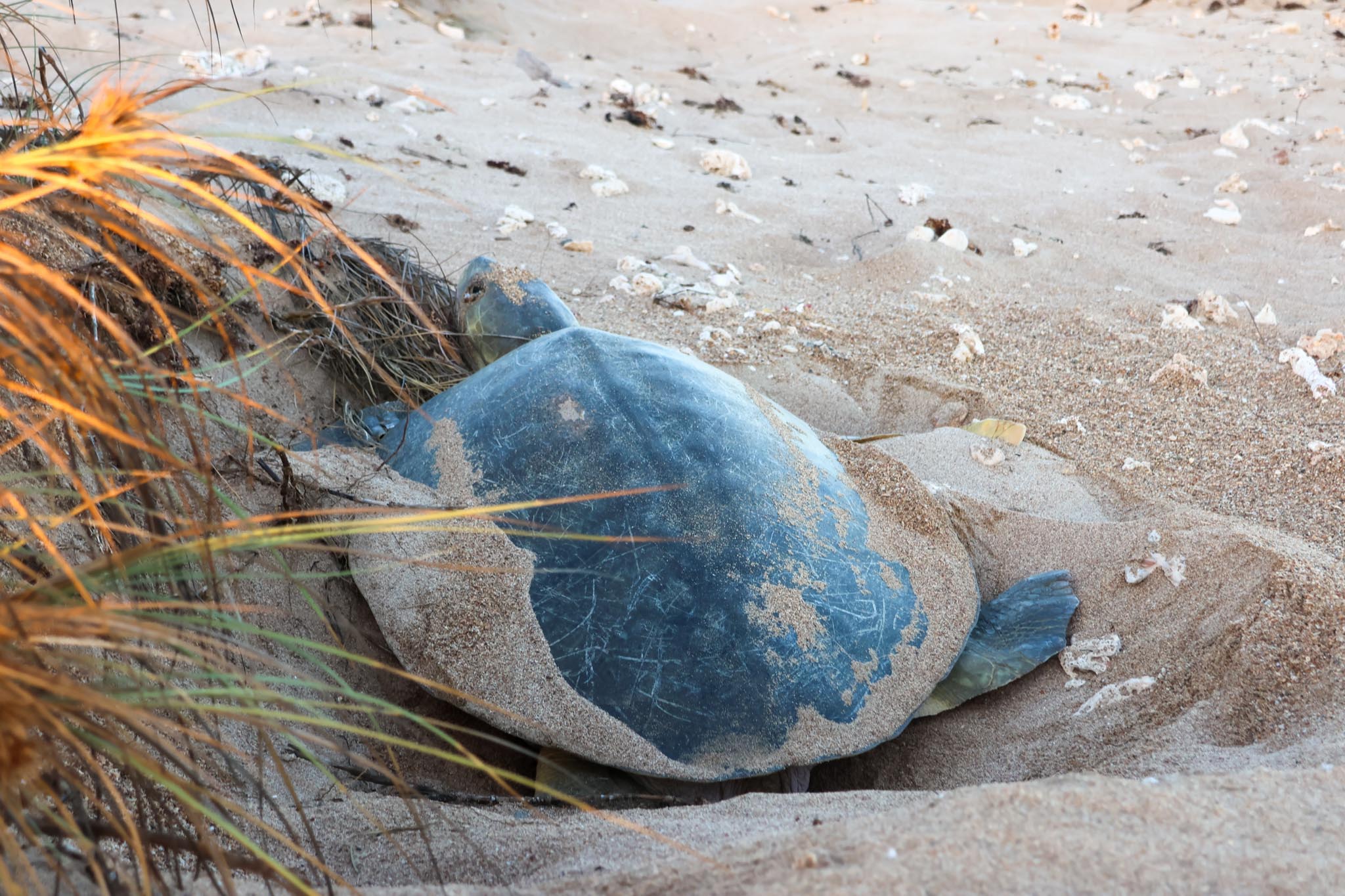
Watching turtles lay their eggs is an awe-inspiring experience. Visit this page to find out more about how to safely watch nesting adult turtles.
Find out more