
  • homeHome
  • searchSearch
  • emailContact

Secondary menu

  • Who we are
    • Our people
    • Governance
    • Traditional Custodians
    • Project Partners
    • Our people
    • Governance
    • Working with Traditional Custodians
    • Project partners

  • What we do
    • Research
    • Monitoring
    • Expert advice
    • Education & Communication
    • Research
      • Biology
      • Threats
      • Other Research
    • Monitoring
    • Expert advice
    • Education and communication
      • School Engagement
      • Community Engagement
      • Communicating Science

  • Flatback turtles
    • Flatback biology
    • Flatback threats
    • Flatback conservation
    • Australian turtles
    • Flatback biology
    • Flatback threats
    • Flatback conservation
    • Australian turtles

  • Resources
    • Guidelines and policies
    • Peer-reviewed research
    • Monitoring and volunteering
    • Education resources
    • Code of Conduct
    • Guidelines and policies
    • Peer-reviewed research
    • Monitoring and volunteering
    • Education resources

  • Get involved
    • Work with us
    • Post-graduate students
    • Volunteering
    • Learn with us
    • Work with us
    • Post-graduate students
    • Volunteering
    • Learn with us

  • Turtle watching

Breadcrumb

  1. Home
  2. What We Do
  3. Monitoring

Delambre Island

Photo - Duncan Thomson/DBCA

The Delambre Island turtle monitoring program began in 2008 and was run by Rio Tinto as part of the Cape Lambert Marine Turtle Management Plan, attached to the Rio Tinto Cape Lambert Port B Development. In 2017, the NWSFTCP took over the monitoring program as part of a collaboration agreement with Rio Tinto.

As one of the largest flatback turtle rookeries in Australia, staff and volunteers on Delambre Island are kept busy by the hundreds of turtles that come onto the beach each night. The island is uninhabited and devoid of any permanent structures, which means a large field camp must be set up for the month-long monitoring period. Work on the island is conducted with the assistance of the Ngarluma Traditional Custodians through the partnership with the Ngarluma Aboriginal Corporation.

To learn about volunteering opportunities on Delambre Island, please click here.
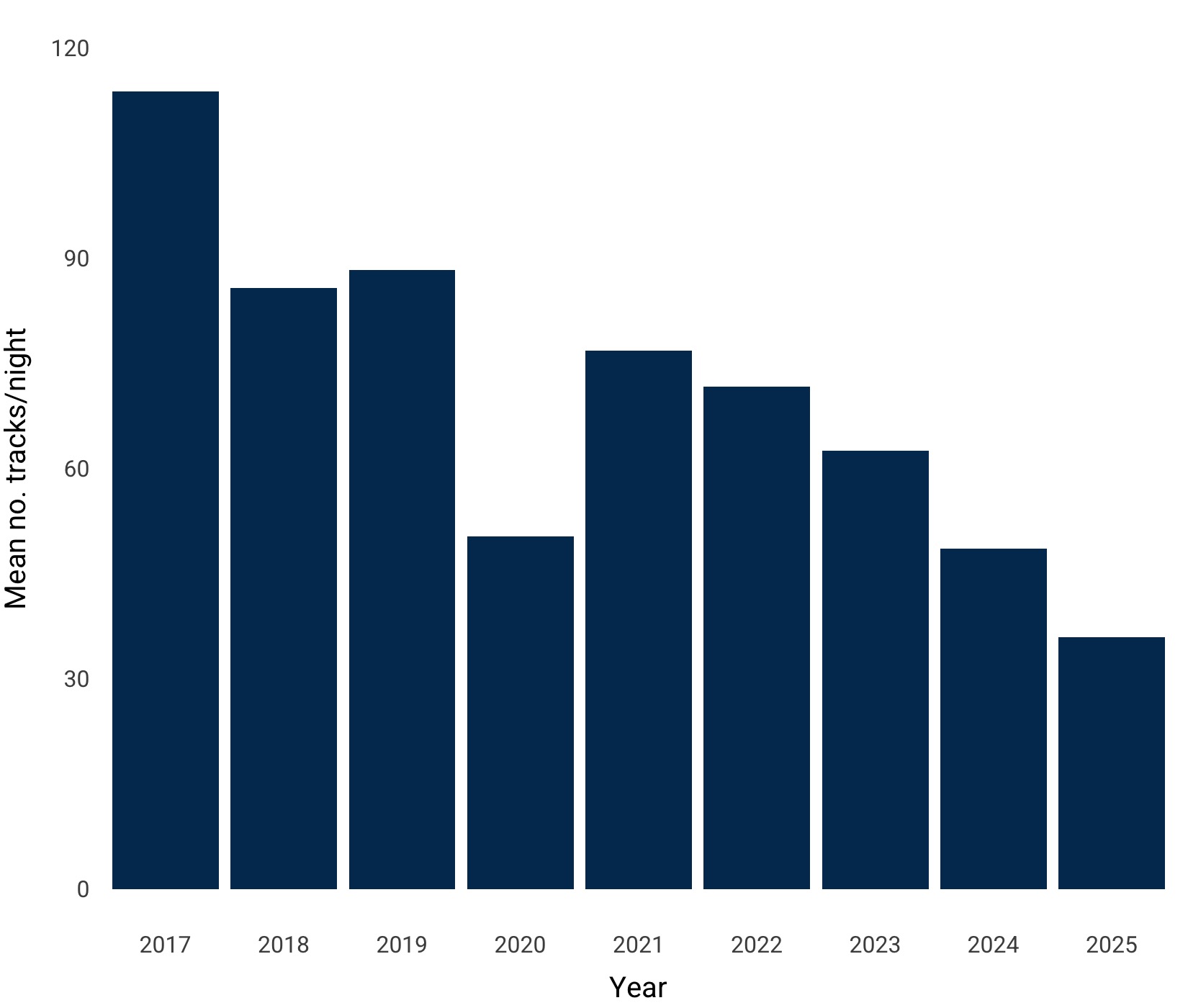
Mean number of turtle tracks per night on Delambre Island from 2017-2025.


Disclaimer: 

The data included in this graph is the property of the Department of Biodiversity, Conservation and Attractions. This data is to be used only for educational purposes and not for distribution, publication or commercial use. Data may have been de-identified or excluded in the process of making it available to the public domain and is subject to change following further curation and analysis.
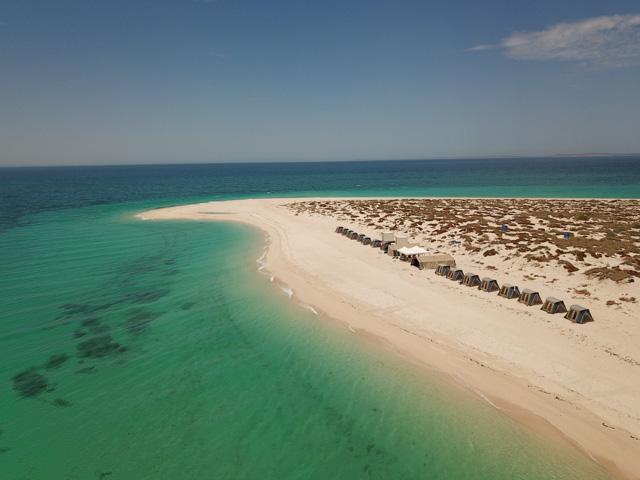
Aerial view of Delambre Island camp setup. Photo - Duncan Thomson/DBCA
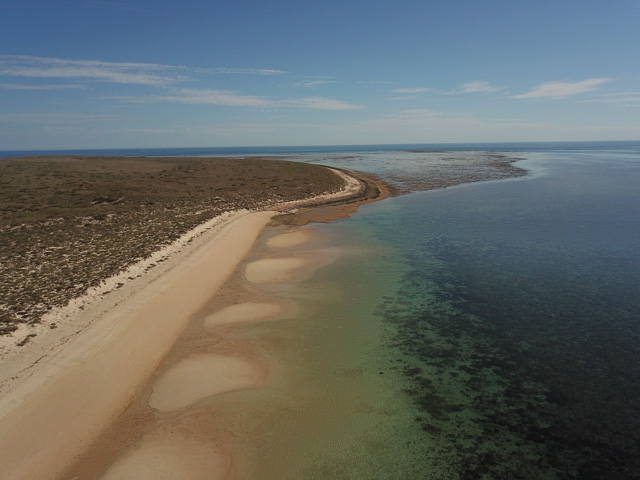
Aerial view of Delambre Island. Photo - Duncan Thomson/DBCA
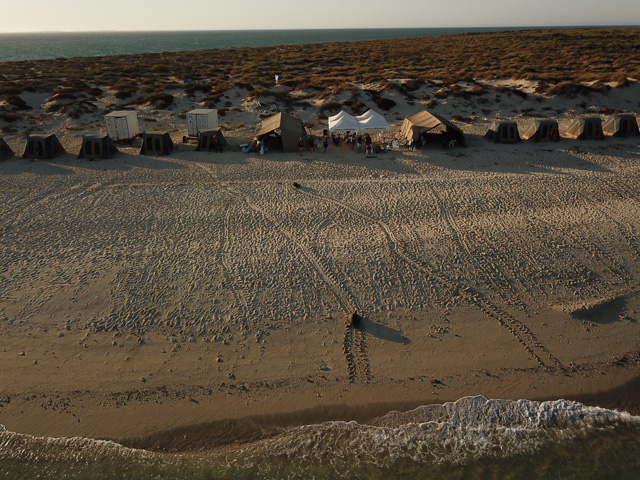
Aerial view of Delambre Island camp setup, where flatback turtles can be seen approaching camp. Photo - Duncan Thomson/DBCA

Delambre Island

Thevenard Island

Yawuru Nagulagun Roebuck Bay

Cape Domett

Eco Beach

If you've found injured wildlife, call the Wildcare Helpline on 61 8 9474 9055.

Image
facebook
Image
linkedin
Image
icon-instagram
Image
icon-email

Footer Home

  • Home
  • Latest updates
  • Contact

Who we are menu

  • Who we are
    • Our people
    • Governance
    • Working with Traditional Custodians
    • Project partners

  • Our people
  • Governance
  • Traditional Custodians
  • Project partners

What we do menu

  • What we do
    • Research
      • Biology
      • Threats
      • Other Research
    • Monitoring
    • Expert advice
    • Education and communication
      • School Engagement
      • Community Engagement
      • Communicating Science

  • Research
  • Monitoring
  • Expert advice
  • Education

Flatback turtles menu

  • Flatback turtles
    • Flatback biology
    • Flatback threats
    • Flatback conservation
    • Australian turtles

  • Flatback biology
  • Flatback threats
  • Flatback conservation
  • Marine turtles of WA

Resources menu

  • Resources
    • Guidelines and policies
    • Peer-reviewed research
    • Monitoring and volunteering
    • Education resources

  • Guidelines & policies
  • Peer-reviewed research
  • Monitoring and volunteering
  • Education

Get involved menu

  • Get involved
    • Work with us
    • Post-graduate students
    • Volunteering
    • Learn with us

  • Work with us
  • Post-graduate students
  • Volunteering
  • School camps & incursions

WA.gov.au

Copyright

Disclaimer

Privacy

© Government of Western Australia 2025

Back to top