Home
Home Search
 Contact


Threats from structures in and around the ocean
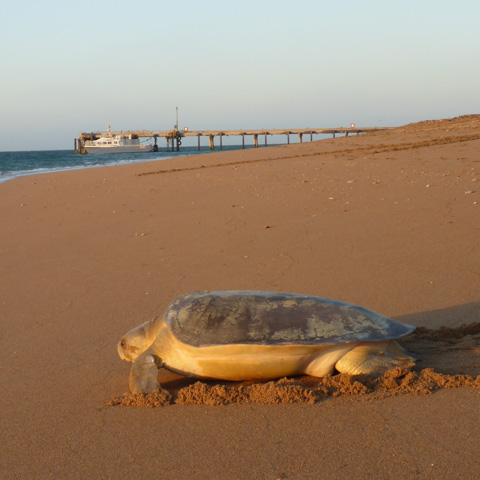
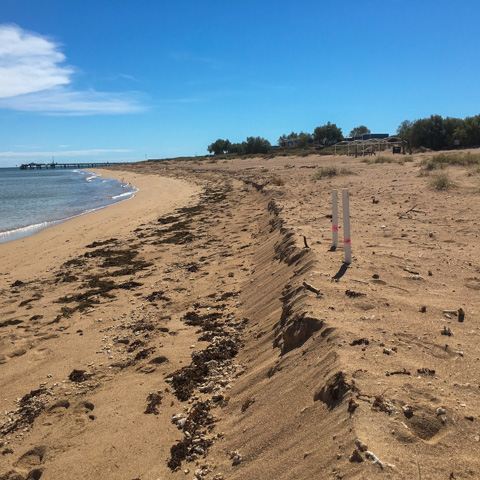
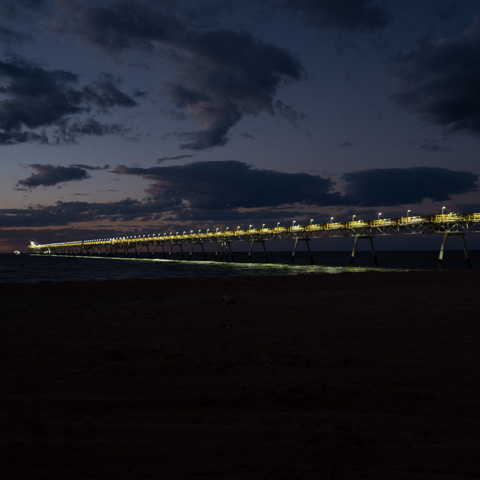
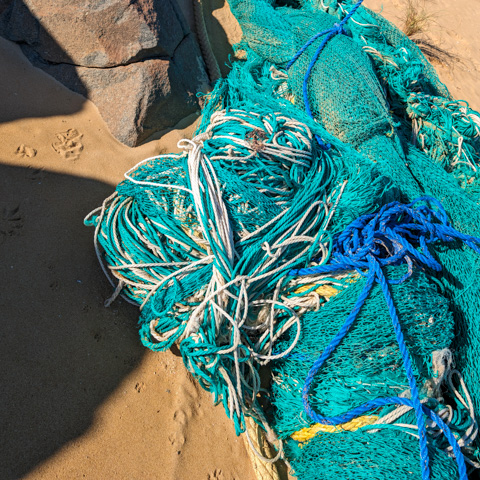
The North West Shelf flatback turtle population lives in the industry-rich Pilbara region of Western Australia, characterised by a high level of industrial development along the coastline that includes nearshore structures such as jetties, ports and spoilbanks. These structures can pose a threat to marine turtles through associated erosion, increased predation, light pollution, chemical pollution and the increased risk of boat strike.
What we know so far
Understanding the threats associated with nearshore and offshore structures and where these pressures overlap with flatback turtle nesting locations is of high priority for the NWSFTCP. The use of aerial surveys across the Pilbara’s North West Shelf has identified the locations of turtle nesting locations and industrial pressures, revealing new conservation opportunities for rookeries that are relatively unexposed to pressures but are not yet protected. An assessment of the relationship between nearshore structures and predation levels suggests that structures such as jetties can concentrate predators and decrease the likelihood of survival for flatback turtle hatchlings.
Examples of industrial development near flatback rookeries in the Pilbara
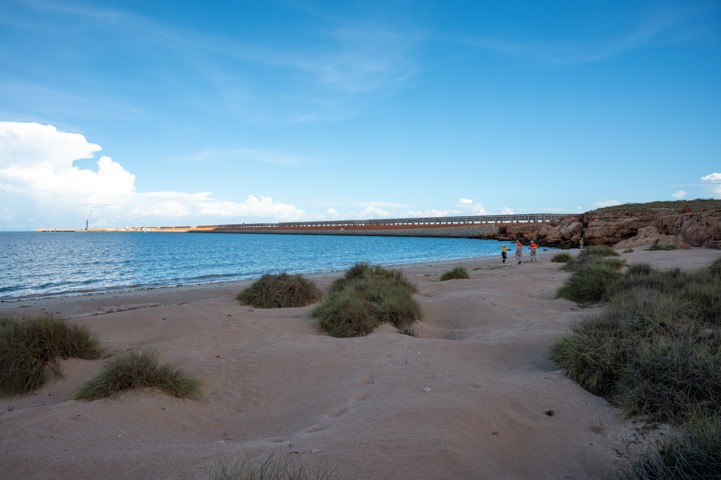
Barrow Island industrial development. Photo - Tristan Simpson/DBCA
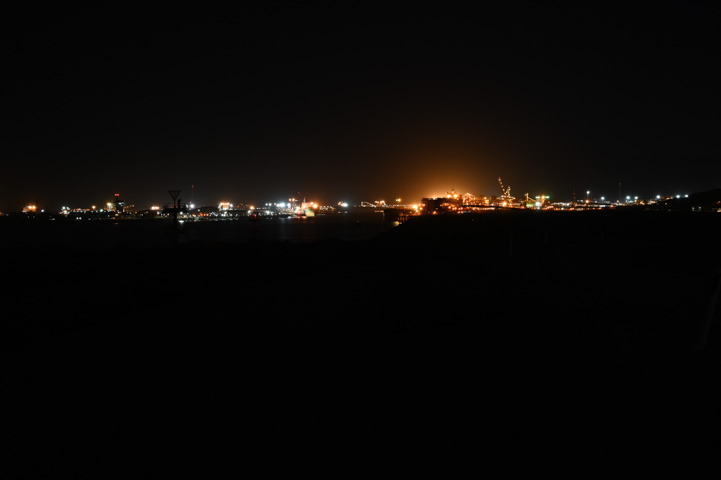
Port Hedland port development. Photo - Tristan Simpson/DBCA
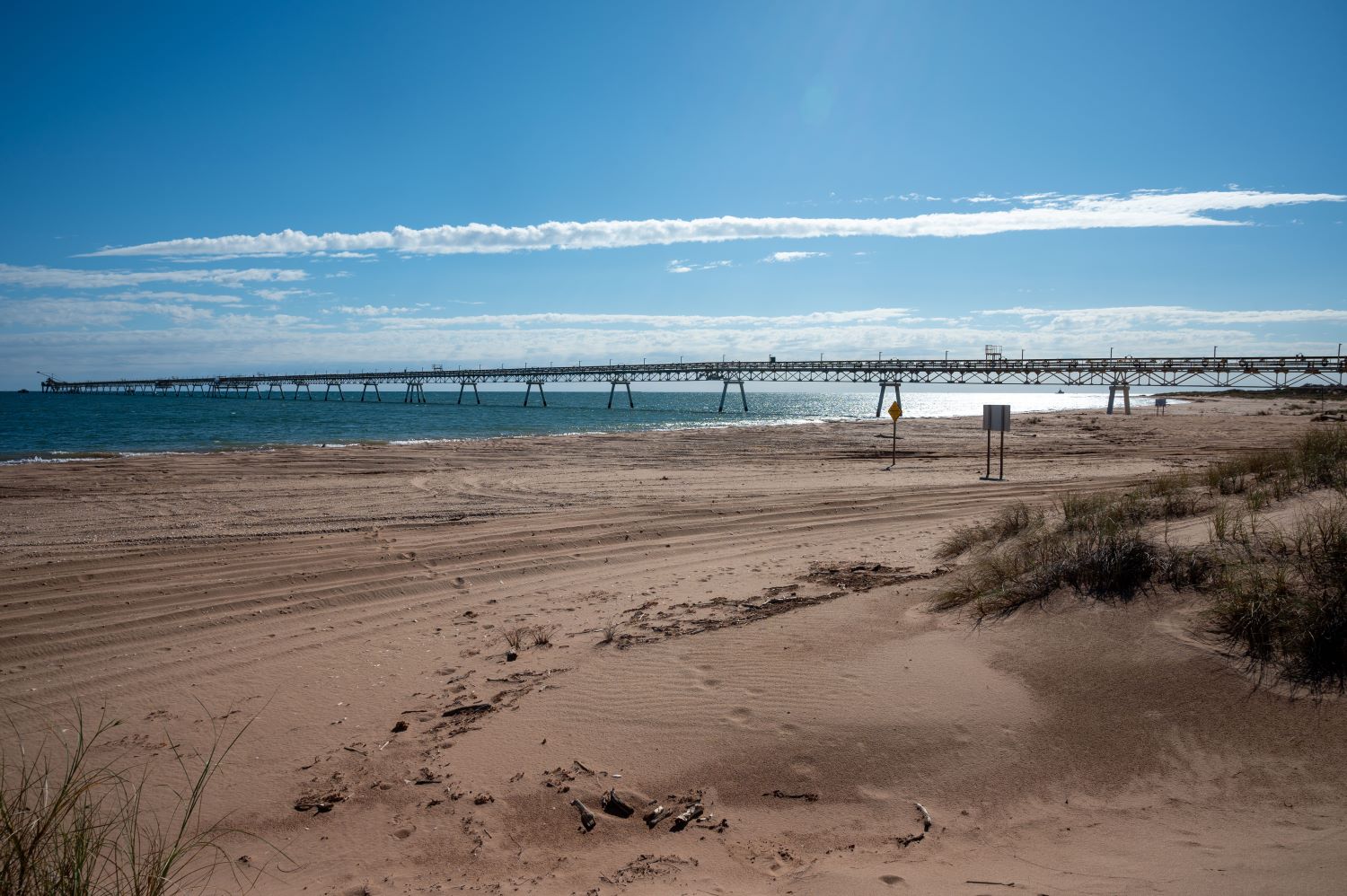
Onslow Salt Jetty at Back Beach, Onslow. Photo - Tristan Simpson/DBCA
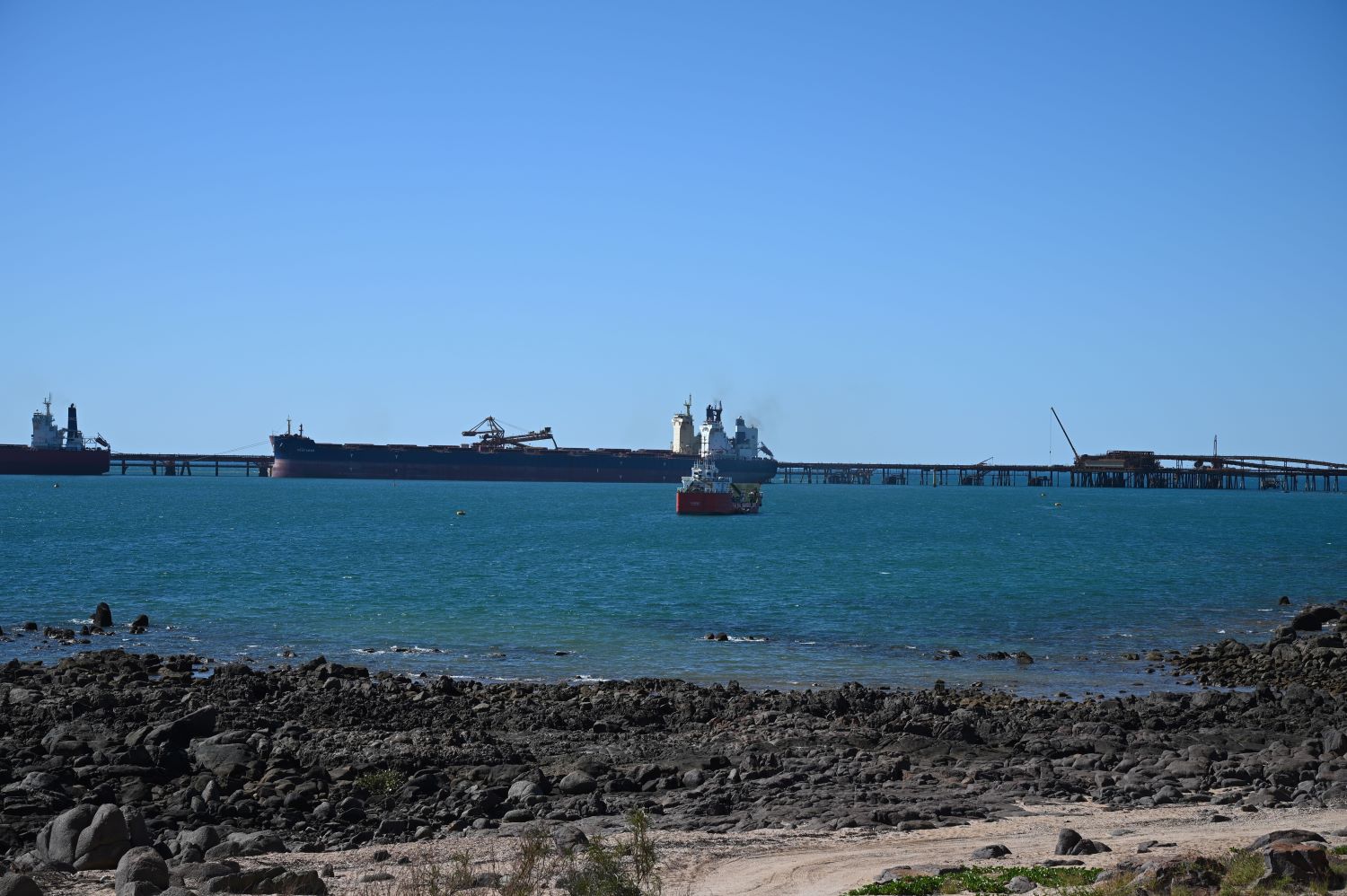
Dampier Port as seen from Murujuga National Park (Burrup Peninsula). Photo - Tristan Simpson/DBCA
Research highlights

It is impossible to be present at all beaches where flatback turtles nest across the Pilbara to get an accurate picture of species distribution and abundance. Instead, the NWSFTCP investigated the use of aerial photogrammetry as a tool for assessing relative distribution and abundance of flatback turtles across this vast region, and for identifying nesting beaches exposed to industrial development impacts.
The aerial survey covered most sandy beaches in the Pilbara region of Western Australia. It included 644 mainland beaches and offshore islands and was conducted over six days in November and December of 2016 (peak nesting season). High-resolution photos (1-3 cm) taken from the plane were reviewed by researchers to identify beaches with evidence of turtle nesting – tracks, nests, and body pits. The aerial tallies were validated with multiple ground surveys conducted at the same time.
Flatback turtle tracks were identified at 174 beaches, spread across 308 km of islands and the mainland. Beaches with the greatest abundance were Delambre Island, Barrow Island and Mundabullangana. Overlaying locations of industrial and protected sites showed that a third of all flatback turtle nesting beaches were located within 5 km of at least one major industrial site, and almost all (97 per cent) were located within 50 km of major sites. Positively, 77 per cent of flatback nesting beaches were located within protected areas. Assessing the location of high abundance rookeries, protected, unprotected and exposed beaches is important for the future management and monitoring of this population.
This research was conducted by DBCA/NWSFTCP.
Do nearshore structures such as jetties pose a threat to marine turtles? In this study, researchers compared predation levels for two nesting sites with similar activity; one near a jetty and one without any nearshore structures. The results revealed that around 70% of the tagged hatchlings at the site near the jetty were predated before they could transit the nearshore waters (irrespective of the presence or absence of artificial light), while between 3-23% of hatchlings were predated at a site with no nearshore structures.
By providing daytime refuges for predators, nearshore structures such as jetties can concentrate predators and may pose a significant threat to populations of vulnerable species. This must be considered when assessing the environmental impacts associated with these structures.
This research was led by the The University of Western Australia and the Australian Institute of Marine Science, in collaboration with DBCA/NWSFTCP and Pendoley Environmental.
Publications
Researchers
Dr Scott Whiting
Principal Research Scientist
Dr Sabrina Fossette
Senior Research Scientist

Dr Tony Tucker
Senior Research Scientist